Picking the right multi-day tour of Ireland is a question of how you want to meet the country: the pace, the company you keep, and the parts of it you actually get to see. After nearly four decades of running these tours from our base in Galway, we’ve watched guests pick well, and we’ve watched them pick badly.
The difference rarely comes down to the obvious things. It comes down to a handful of decisions most travellers don’t think to ask about.
This is the guide we wish every visitor had before they booked.
At a Glance: How to Pick the Best Multi-Day Ireland Tour
The short version, before we go deeper:
- Length: anything from 3 to 14+ nights counts as multi-day, but 5–12 days is the sweet spot for most international visitors.
- Route: 5 or 6 days suits a focused trip through the West and South. 7 or 8 days brings in the North or West Cork. 10–12 days lets you see the whole island without rushing.
- Group size matters more than length. Anything over 20 guests starts to feel like a coach holiday rather than a proper tour.
- The best tours of Ireland are locally owned, operate year-round, include the headline activities upfront, and are guided by people who actually live in the regions they’re showing you.
- Best time? May–June and September–October are the quiet wins. July and August are warmer but busier.
- Private tours are worth it for families of 4+, anyone with specific interests, or guests who don’t want to share their week with strangers.
Below, we’ll walk through each of these properly, with the kind of detail you only get from people who run these trips themselves.
What Counts as a Multi-Day Tour of Ireland?
A multi-day tour of Ireland is a guided trip of two or more nights, usually with transport, accommodation, and at least some activities included. Most are scheduled departures with a small group; some are private, built around one party.
That’s the textbook answer.
Here’s the more useful one: a good guided trip is the difference between seeing the country and meeting it.
The day trips out of Dublin or Galway are excellent for what they are, but they only ever show you one slice. A multi-day route lets the country layer up. The landscape changes, the accents change, the food changes, the music changes, and you start to understand why people who live here talk about the West, the South, and the North as if they’re different countries.
Most of our multi-day Ireland tours sit between 5 and 12 days. That’s not arbitrary – it’s the range where a trip stops being a sampler and starts being a proper experience.
How Many Days Do You Need for a Multi-Day Tour of Ireland?
For a first visit, plan for at least 7 days on the ground, with 8–10 being ideal. Ireland is small on a map and slow on the road, and most visitors badly underestimate how much that slows the pace.
A few honest benchmarks from our own routes:
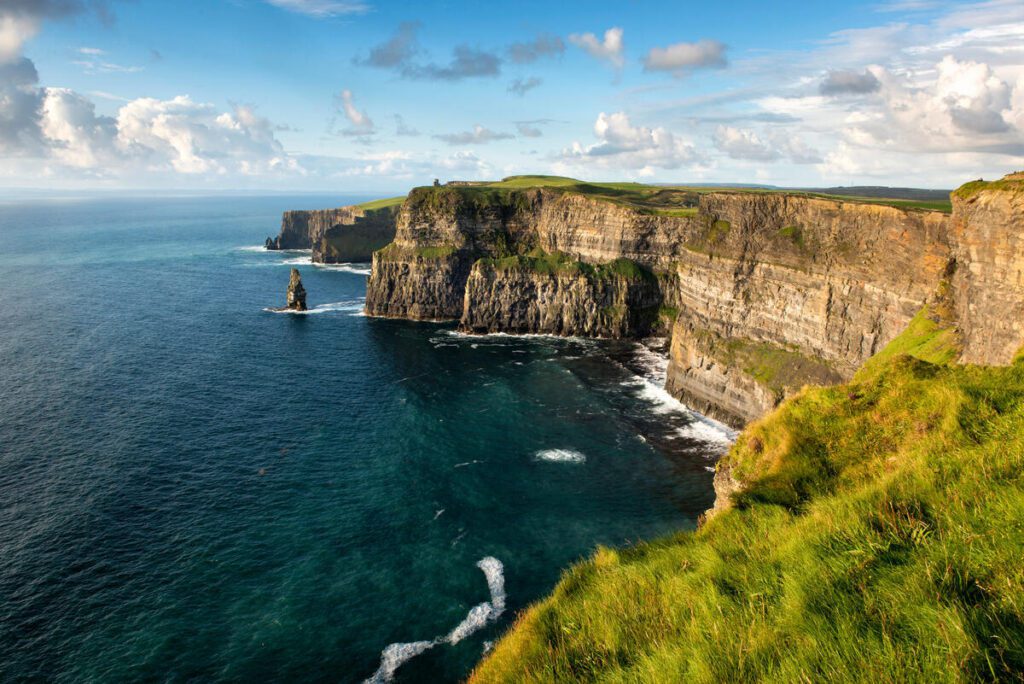
- 5 days is enough for a focused arc: Dublin in, Galway, Connemara, the Cliffs of Moher, the Aran Islands, Killarney, and back. It moves at a steady pace.
- 7 days gives you the same arc plus West Cork, Kinsale, and a proper look at Cork City. It’s the length we recommend most.
- 10 days or more is what you need to bring in Belfast, the Giant’s Causeway, and Donegal: the parts of Ireland most tours skip.
Comparing Ireland Tour Lengths: 5, 6, 7, 8, 10 and 12 Days
| Tour Length | Best For | Regions Covered | Pace | What You’ll Miss |
| 5 Days | First-timers, short windows | Galway, Connemara, Cliffs of Moher, Aran Islands, Kerry | Steady | West Cork, Belfast, Donegal |
| 6 Days | The 5-day route + a slower finish | Adds West Cork & Kinsale | Steady start, chill finish | Belfast, Donegal |
| 7 Days | The most popular choice | Adds Cobh, Midleton Distillery | Balanced | The North |
| 8 Days | Travellers drawn to the North | Belfast, Giant’s Causeway, Donegal, Connemara, Galway | Moderate | West Cork, Kerry |
| 10 Days | Anyone who wants the whole island | Belfast, Donegal, Galway, Killarney, Cork | Relaxed | Inland Midlands |
| 12 Days | A complete loop with breathing room | All of the above, with double-night stays | Slow and proper | Very little |
If you’re choosing between two lengths, go for the longer one. We’ve never had a guest at the end of a trip wish they’d booked fewer days.
Most guided tours of Ireland, ours included, follow some version of the Wild Atlantic Way – Ireland’s 2,500-kilometre coastal route along the western seaboard. For the actual day-by-day, have a look at our 5, 6 and 7 day West & South tours, our 8 day West & North tour, and our 10 and 12 day all-Ireland tour.
What to Look For in an Ireland Tour Operator
Five things matter more than the brochure photos, and they’re what separates the best tours of Ireland from the average ones:
1. Locally owned and locally run.
Plenty of Ireland tour operators are headquartered overseas or run from a corporate office in Dublin. The best ones live where they tour. Our guides grew up in the villages we drive through. They know the publican by name, they know which back road has the better view, and they know when the festival in Kinvara is on. That isn’t something a training manual produces.
2. Year-round operation.
Plenty of operators close down between November and March. We don’t, and that tells you something about how committed they are to the work versus how committed they are to the high season. Year-round operators have weatherproofed their routes for every condition Ireland throws at them. Seasonal ones are usually just chasing the summer.
3. Included activities, not constant add-ons.
Read the inclusions carefully. Some operators sell you transport and accommodation, then charge separately for almost every experience along the way: the boat cruise, the distillery tour, the sheepdog demo, the museum admissions. By the end of a week, the “tour” has cost €500 more than advertised. Look for operators who include the group activities upfront, with optional extras clearly marked.
4. Honest accommodation choices.
A locally owned 3-star hotel in the centre of a market town will give you more of the Wild Atlantic Way than a 4-star chain on a ring road. The best operators choose accommodation for character and location, not because they have a bulk supplier deal with a hotel group.
5. Real reviews from real guests.
Look past the star rating to read what people actually say. The patterns matter – are reviewers naming the same guides? Mentioning the same off-itinerary moments? That’s a sign the experience is consistent, not a one-off.Lally Tours has been recognised as a TripAdvisor Travellers’ Choice Best of the Best winner three years running. We mention it not to brag, but because it’s the kind of repeat recognition that’s hard to fake.
Small Group vs Large Coach: Why Group Size Matters on a Multi-Day Ireland Tour
Group size is the single most underrated factor when picking a tour. It changes everything that follows: the roads you can drive, the towns you can stop in, the pubs you can fit into… or the guide’s ability to remember your name.
Here’s the practical difference:
- Large coach tours (40–55 guests) are limited to main roads and large hotels. The day starts with a queue to board and ends with another queue to disembark. The guide speaks at the group, not with you.
- Small group tours of Ireland (typically 10–20 guests, in a midi-coach or van) can take the back roads through Connemara, pull over for an unplanned stop, and seat the whole group around one table for dinner.
We cap our small-group trips at 20 guests, and most run with 12–16. That’s a deliberate choice, not a marketing line. It’s what allows our drivers to be guides rather than just operators of a vehicle, and it’s also why we have a no-Wi-Fi-on-board policy, which sounds odd until you experience it.
Is a Private Tour of Ireland Worth It?
Yes, for the right group. A private Ireland tour is the better choice if:
- You’re travelling with 4 or more in your own group (family, friends, a celebration).
- You want to set the pace yourself: slower mornings, longer dinners, more time in places that interest you.
- You have specific interests, like golf, food, photography, or traditional music, that a scheduled departure might not fully accommodate.
- You don’t want to share your tour with strangers, however charming those strangers usually turn out to be.
The pricing is more involved than a scheduled tour, because it’s built around your group. But for many guests, particularly those marking a milestone or travelling multi-generationally, the cost works out reasonably once it’s split across the party.
We design these as a conversation, not a configurator. If you’re considering it, the right move is to tell us what you have in mind and we’ll put options together from there.
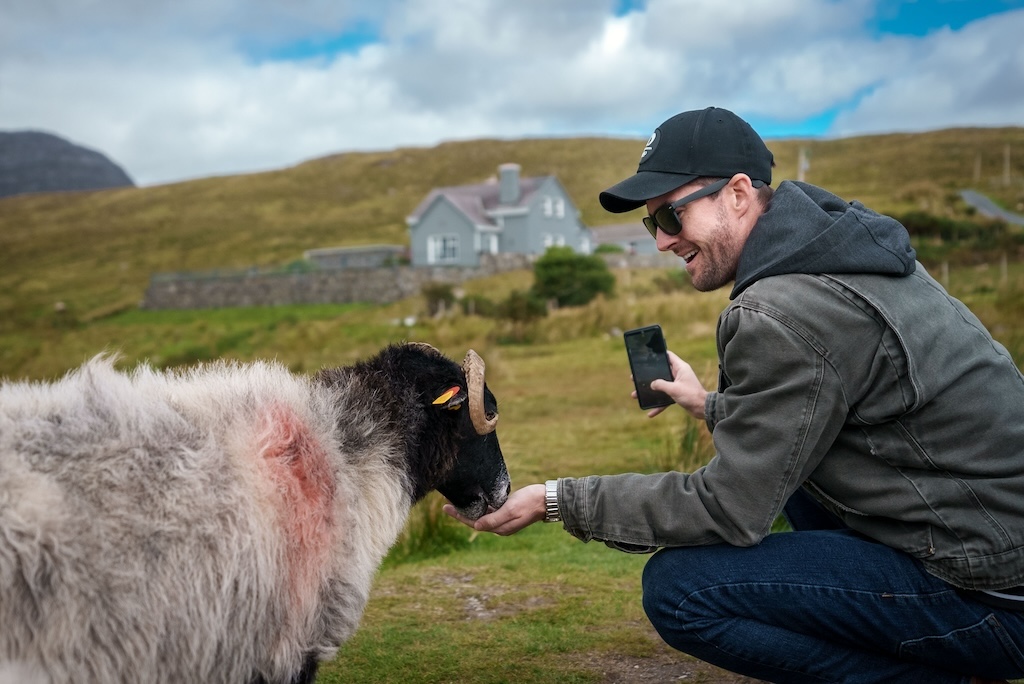
When’s the Best Time to Visit Ireland on a Guided Tour?
March and April are quieter and best priced. May, June, and October are the windows we’d put a friend in. July, August and September are super lively.
Long daylight, manageable crowds, and weather that behaves itself more often than not. July and August are warmer and busier; that’s fine if you want festival energy in towns like Galway, but expect packed sights at the Cliffs of Moher and higher accommodation prices.
A simple month-by-month read:
- March: Winter is over and Spring is coming – happy locals and great deals.
- April: Bright, breezy, occasional rain. Quiet roads. Daffodils everywhere.
- May–June: The settled stretch. Best balance of weather and fewer crowds.
- July–August: Peak season. Long days, lively pubs, busy sights.
- September: Soft light, ripe blackberries in the hedges, schools back so families ease off.
- October: Atmospheric. Stormy skies make the Cliffs of Moher look extraordinary. Pack layers.
- November–March: Quiet, cool, dramatic. Our year-round tours run, but expect short days and changeable weather. Good for guests who’d rather have the country to themselves.
If you want to track the forecast as your trip approaches, we wrote a piece on the apps and sites we actually use for Irish weather. The Met Éireann site is the one we check first; you can find it at met.ie.
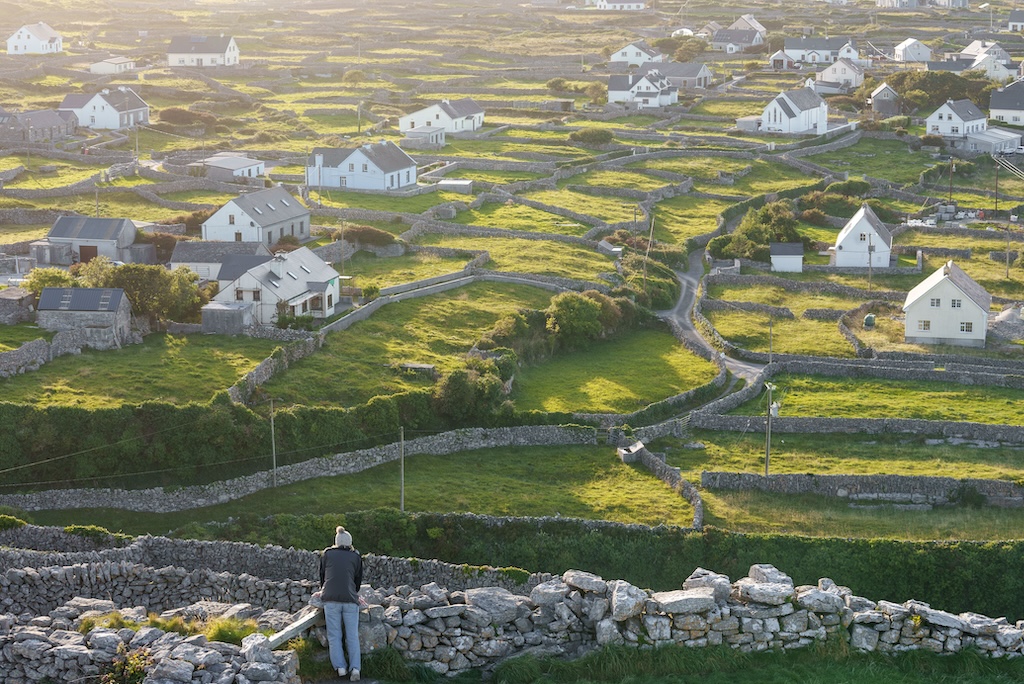
What’s Included in an Ireland Multi-Day Tour Package?
Inclusions vary wildly between operators, so check the small print.
A solid Ireland tour package should cover:
- All ground transport between destinations (including any train segments, like our Galway-to-Dublin finish).
- All hotel accommodation, with breakfast each morning.
- Every group activity listed in the itinerary (boat cruises, walking tours, sheepdog demos, distillery visits, etc.).
- Guide services throughout.
- Entry fees to ticketed attractions named on the itinerary.
- Lots of independent time.
- Top quality pre-arrival customer support, and whilst the tour is happening.
What’s typically not included:
- Lunches and dinners (kept flexible so guests can choose pubs, cafés, and restaurants at their own pace – we’d argue this is a feature, not a flaw).
- International flights into Ireland.
- Travel insurance.
- Optional add-on activities on free days (golf, spa, bike rental, etc.).
- Tips for guides and drivers.
If an operator’s “from” price seems unusually low, it’s almost always because half the things you’d expect to be included aren’t. Tourism Ireland’s national authority, Fáilte Ireland, publishes general guidance for visitors that’s worth a read if you want to sanity-check what you’re being quoted.
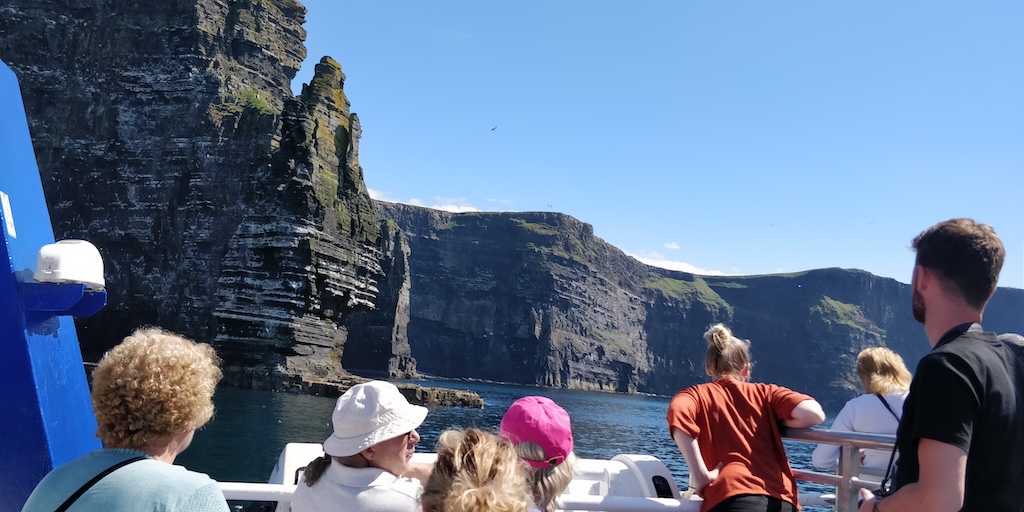
Ready to Pick the Right Tour of Ireland for You?
The best tour of Ireland for you is the one that matches how you actually want to travel, not the one with the longest list of stops. Most of our guests rebook with us because the things we left out (the rush, the queues, the impersonal coach) mattered more than the things we put in.
If you want help working out which of our multi-day Ireland tours fits best, or whether a private route would suit you better, get in touch with our team. We’ll talk through it properly, with no pressure either way.
You can also read more about the family behind Lally Tours if you’d like to know who you’d be travelling with before you ask anything else.
That’s how we like to do it. It’s worked for nearly forty years.
Multi-Day Ireland Tour FAQs
Where do most guided tours of Ireland start and finish?
Most start in either Dublin or Galway, but Shannon is our favourite.
Dublin is a great airport and easy to fly into; Galway is closer to the western landscapes most guests come for. Choose Dublin if you’d like to add time in the city pre/post tour. Choose Shannon if you want to skip Dublin.
Our scheduled tours typically begin in Dublin with a train transfer west to Galway, then loop south or north before returning to Dublin by train at the end.
What is the best way to tour Ireland?
For most international visitors, a small-group guided trip is the best way to tour Ireland: you get the storytelling, the access to back roads, and someone else handling the driving on the country’s notoriously narrow lanes. Self-drive works if you’re comfortable navigating single-track roads in unpredictable weather. The third option, a private tour, makes sense for groups of four or more.
How fit do I need to be?
For most scheduled tours, a reasonable level of mobility is plenty. There’s walking on uneven ground at coastal sights and within historic towns, but very little is mandatory. If you’d struggle with hills or long days on your feet, look for tours that include “Local Day” stops where you can opt out of the longer walks.
Do I need to speak Irish?
Not at all. English is the everyday language across the island. You’ll hear Irish (Gaeilge) spoken in the Connemara Gaeltacht and parts of Kerry and Donegal, and your guide will translate signposts and place names as you go.
Can I do a tour of Ireland from Dublin without a car?
Yes, easily. The majority of our guests fly into Dublin and never touch a steering wheel. Tours collect from a central Dublin point and return there at the end. If you want to extend before or after, the country is well covered by trains and intercity buses.
Should I book my Ireland tour in advance?
For peak season (June–August) and shoulder season (May, September), 4–6 months ahead is sensible. Smaller-group tours fill earlier than coach tours because there are fewer seats. Off-peak departures are easier, but we’d still suggest 2–3 months ahead.